
Excavator Sprocket Guide: Enhancing Durability and Performance in Undercarriage Systems
In the world of heavy machinery, the excavator sprocket serves as a critical power transmission component. Its primary role is to convey driving force from the final drive to the machine’s body, effectively propelling the crawler track. For operators and fleet managers, choosing a high-quality sprocket like the DH220 series is essential for minimizing downtime and maximizing service life.
1. The Critical Role of the Sprocket in Excavators
The sprocket is not merely a gear; it is the heartbeat of the undercarriage’s movement. By engaging with the track links, it converts hydraulic power into linear motion. Because it is constantly subjected to friction, mud, and heavy loads, its manufacturing quality directly impacts the overall efficiency of the excavator.
2. Technical Specifications of High-Performance Sprockets
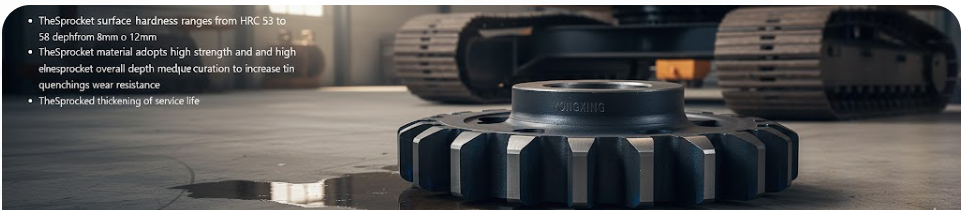
Based on industry-leading standards for models such as the DH220, premium sprockets must meet rigorous technical benchmarks:
Advanced Heat Treatment Technology
Unlike traditional surface-hardened components, RHK Sprockets from YONGXING MACHINERY utilize advanced heat treatment processes. This technology ensures maximum resistance to breakage and allows the component to handle substantial load capacities effectively in harsh environments.
3. Key Advantages of DH220 Series Sprockets
When evaluating a sprocket for your undercarriage, the following four factors set the DH220 apart:
Optimal Hardness Depth: With a quenching depth of up to 12mm, the sprocket maintains its structural integrity even as the outer layer wears down.
Superior Material Configuration: The adoption of high-strength alloy elements increases the wear resistance timeframe significantly compared to standard OEM parts.
Induction Quenching: Overall depth medium frequency quenching ensures that the sprocket doesn’t just have a hard “shell,” but a toughened body capable of resisting impact.
Extended Service Life: Through increased thickening of critical wear zones, these sprockets are engineered for longevity, reducing the frequency of replacements.
4. Maintenance Tips for Extending Sprocket Life
To ensure your excavator sprocket reaches its full potential, follow these maintenance best practices:
Monitor Track Tension: A track that is too tight increases friction and accelerates sprocket tooth wear.
Clean the Undercarriage: Accumulated debris can cause “packing,” which forces the sprocket to grind against the links.
Regular Inspection: Check for “shark-finned” teeth, which indicate that the sprocket is nearing the end of its life and needs replacement to prevent damage to the track chain.
Conclusion
Investing in a high-quality excavator sprocket is an investment in your machine’s uptime. Whether you are operating in rocky terrain or soft soil, the durability offered by DH220 specifications ensures your machinery stays productive. For those seeking the gold standard in power transmission, YONGXING MACHINERY’s RHK series provides the perfect balance of strength, hardness, and reliability.